A minha Lista de blogues

quarta-feira, 18 de abril de 2012

Saint George


St George is the patron saint of England. His day is celebrated on  April 23rd.

St George was a Christian knight. He was born in Cappadocia, Turkey. Later he became a Roman soldier who protested against Rome's persecution of Christians. He was imprisoned and tortured, but stayed true to his faith. He was beheaded at Nicomedia and died on April 23rd, 303 AD. Christians soon came to honour him as a martyr.


Tintoretto (1518-1594)


The story of St. George and the Dragon was a legend brought back by the Crusaders. It dates back to the Middle Ages when the dragon was commonly used to represent evil and therefore is an excellent tale of good triumphing over evil.


 Raphael (1483-1520) St George Fighting the Dragon

It is said that one day while he was riding in the province of Lybia, near a city called Sylene, he came across a place where a dragon lived. The people had gathered to attack and kill it, but its breath was so terrible that all fled. To prevent it coming nearer, locals supplied two sheep to the dragon every day. Yet, when sheep became scarce, a human victim had to take their place.


When a girl was about to become the next victim, St George attacked the dragon and transfixed it with his lance. He borrowed the girl´s girdle and fastened it round the dragon´s neck, and took the monster into the city. St George told the people to have no fear. If they believed in Jesus and were baptized, he would slay the dragon. The people agreed and the dragon was killed.

In the battle of Antioch (1098) during the First Crusade, it was said that St George helped the French against the Byzantine occupiers. The returning crusaders popularized his cult.

King Richard I, The Lion Heart (1157-1199) adopted St George's cross as a uniform for his soldiers: a red cross on a white background. Since then St. George has been popularly identified with English ideals of charity, chivalry and courage (now known as the 3 C's).

However, St George was probably not recognized as England´s patron saint until King Edward III (1327-1377) founded the Order of the Garter, of which St George has always been the patron.


The battle of Agincourt


What made St George's cross as England's official national flag, was its use by King Henry V during his famous victory over the French at Agincourt, in 1415, in the Hundred Years ‘War.

 
The flag of St. George


The rise of the British Empire and the need to unify England, Scotland, Wales and Northern Ireland resulted in St. George becoming less popular. The Union Jack replaced the Cross of St. George as the United Kingdom’s national flag. However, St. George’s cross is still the flag of England!

Read an illustrated children's story based on the 'The Seven Champions' by Richard Johnson (1596):

http://www.stgeorgesholiday.com/downloads/St_George_Dragon_Story.pdf


The Order of the Garter is the oldest and most prestigious order of chivalry in the United Kingdom. It is dedicated to St George, the  patron saint of England. It was founded in 1348 by King Edward III.


The order's emblem is a garter with the motto : "Honi soit qui mal y pense".


King João I (1357-1433) of Portugal married the English princess, Philippa of Lancaster, and was also awarded the Order of the Garter.


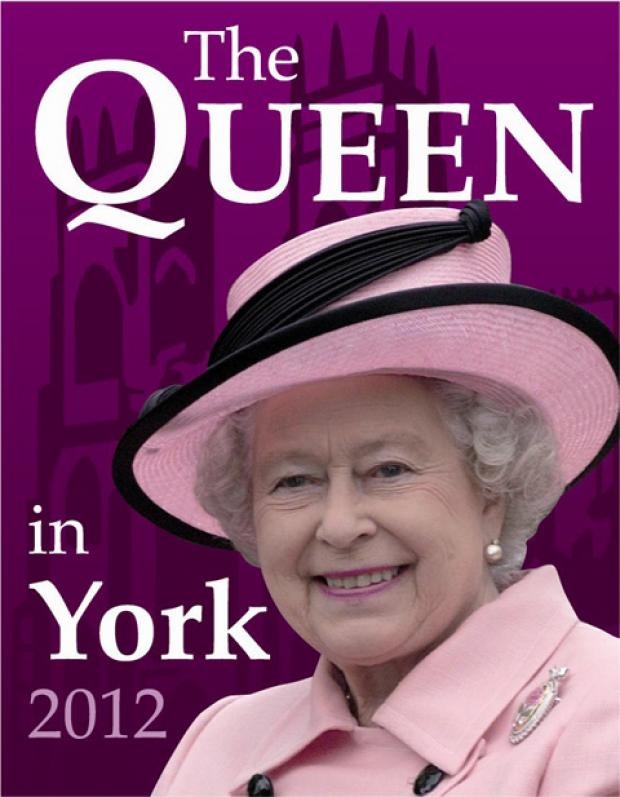
The Queen wearing the mantle and the hat of the Order


This Garter badge was worn by George III for the Installation of the Knights of the Garter on St George's Day (23 April) 1805. 

"A very large Brilliant George with rubies, saphires in the drapery & Brilliant Fleur-de-lis at top". Royal Collection Trust / © HM Queen Elizabeth II 


Royal Yacht Britannia


Saint George in Portugal


The Castle of São Jorge was dedicated to Saint George by King João I of Portugal.


St George Anglican Church is situated in the Estrela district of Lisbon


References:

Walsh, Michael. Butler´s Lives of the Saints. HarperSanFrancisco. 1991

terça-feira, 17 de abril de 2012

Narcissus "Diamond Jubilee"


A new hybrid of daffodil, created to mark The Queen's Diamond Jubilee, has begun to flower in the garden of Buckingham Palace in April, 2012.The Narcissus 'Diamond Jubilee' variety was planted in autumn 2011.


This design in the Buckingham Palace garden  depicts one pink diamond for each decade of Her Majesty's reign.

References:
"The British Monarchy"
in Facebook

segunda-feira, 9 de abril de 2012

Food and Ethnicity in America


When you learn a foreign language there are some rules you must know, and some of them are related to culture and have nothing to do with grammar.
If there is a topic people like to talk about when they learn you are Portuguese, that topic is FOOD. Of course we know our “cuisine” is of excellent quality:  the variety of fresh fish, good fruit and vegetables all year round, but it may seem a bit odd to keep a long conversation about this theme.

Most Americans don´t like to change their food habits and try something new (fortunately I know some exceptions) and if you go shopping for fish you will only find the fillet (they all look the same because to show a whole fish with its head, scales and tail isn´t probably good for business).

I remember an American teenager staring with horror at Portuguese sardines (in a restaurant that serves Portuguese food which they like to call “ETHNIC”).


Portuguese sardines "Sardinha assada"

My Uncle Luís was proudly presenting the big fish he had caught


Moreover, I can´t forget some years ago when the Day of Portugal was commemorated in the Boston State House and Mitt Romney was the governor of Massachusetts. He came to the event as the guest of honour. State Representatives and State Senators were present as well as officials from Portugal.

When it was his turn to speak he couldn´t avoid talking about the Portuguese contributions to the state of Massachusetts: the chourico and linguica. Apparently these two types of sausages were all he could think of to discuss the Portuguese heritage in Massachusetts. Also, the speech was very short and he did not speak of other important Portuguese contributions. For example, the former governor could have mentioned the Portuguese connection to the whale and textile industries and, presently their entrepreneurial spirit in developing so many small businesses or even their capacity to integrate themselves successfully in the American way of life.

Mr. Mitt Romney was just trying to fill in the void…but he did not succeed. Again, it is important to bear in mind that the occasion was intended to celebrate the Portuguese Heritage Day, which is in June, the same month of the National Day of Portugal. As Governor of a State with numerous Portuguese, Mr. Romney should have made some references to its relevant contributions to World History or even American History.


Maybe he does not know, but the first neutral country to recognize American Independence was the Kingdom of Portugal, or instead, if he wanted to speak about food and beverages he could have mentioned that the renowned Founding Fathers, when signing the Declaration of Independence, congratulated themselves with Madeira wine.     


I hope that if this well intentioned gentleman ever becomes president of the USA (it seems he is winning more states and may be the chosen republican candidate) he will find someone to write more inspiring speeches, otherwise presidential messages to various ‘ethnical communities’ will be reduced to the Cape-Verdean cachupa, the Brazilian feijoada, the Italian pizza, the German bratwurst or the French Crepe…


Also concerning food is the matter of etiquette. Europeans and Americans have different rules concerning table manners.


In the American Way, the Knife is held in the right hand and the fork in left hand. After a few bite-sized pieces of food are cut the knife is placed on the edge of the plate with the blades facing in. They eat their food by switching the fork to the right hand (unless they are left handed). A left hand, arm or elbow on the table is bad manners.

In the European Style the difference is that you don't switch hands. Instead, you eat with your fork in your left hand, and knife in your right. Both utensils are kept in your hands during the meal while you eat.
Cultural habits on etiquette are hard or even impossible to judge. Indeed, when it comes to eating at the table, it is not a political or ethical matter, merely one of taste and habit. So, one should be aware of different practices but avoid being patronizing.  

9th April 2012


quarta-feira, 4 de abril de 2012

Easter


Traditionally the main gift at this time of year is an egg. It symbolizes a new life and is a sign of a new beginning, as winter is over. In Victorian England hard boiled eggs were painted and rolled down the hills to symbolize the stone which was rolled away from Christ´s tomb.


Nowadays chocolate Easter eggs are also popular in Britain. Sometimes people hide Easter eggs and children look for them. The first chocolate eggs were introduced in England in the 19th century.


 Fabergé eggs in the Kremlin Museum

During the 19th century Carl Fabergé (1846-1920), the Russian Imperial Crown jeweller designed a group of elegant ornamental eggs that were exclusively made for Russian Tsars. These eggs date back to 1885, when Czar Alexander III and Czarina Maria Feodorovna of Russia were celebrating their twentieth anniversary and Alexander III ordered an elaborately decorated Easter egg to give to his wife on Easter morning.

Each egg is a unique creation encrusted with precious jewels. Inside the eggs were hidden miniature surprises. The eggs were given by members of the imperial Family as Easter gifts.


There are 50 Imperial Easter Eggs in the world. Queen Elizabeth II owns the largest private collection: three. It was King Edward VII and his wife Alexandra who started the royal collection of Faberge works.

These eggs created by Faberge for the Russian royal family have become well-known pieces of art around the world.


The Mosaic egg was made for Nicholas II of Russia, who presented it to his wife, the Empress Alexandra Feodorovna (Queen Victoria´s granddaughter) in 1914. It was later purchased by the British Royal Family in 1934.


The Fabergé Diamond Jubilee Egg
Crafted with precisely 500 grams of rose gold, the one-of-a-kind egg is topped with 60 gemstones—one for each year of the Queen’s reign.The Diamond Jubilee Egg is valued at $157,850 and is the top prize in the
The Fabergé Big Egg Hunt. It will be on display at the Fabergé boutique from February 21 until April 1, and then at Harrods in Knightsbridge from April 2 -8.


Maundy Thursday
Maundy Thursday commemorates the Last Supper of Jesus Christ with the Apostles. The term “Maundy” comes from the word “mandatum,” Christ’s commandment to love one another.


On this date the Queen distributes Maundy money to an equal number of men and women. The number of recipients is related to the mon­arch’s age. Buckingham Palace says the tradition of the mon­arch handing out money to subjects dates back to the 13th century. The source of the coins and the honour of receiving them make them more valuable than their face value: a few pennies totaling the age of the sovereign.


Hot cross Buns


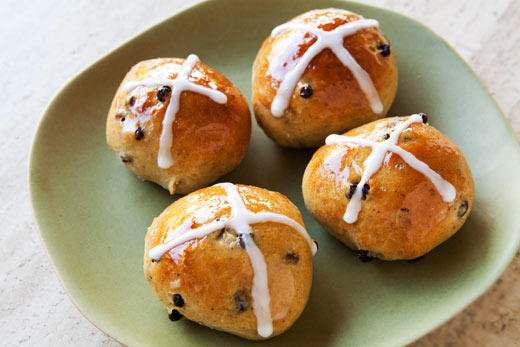
On Good Friday Christians remember Jesus who died on the cross. In Britain hot cross buns are popular on Good Friday.

No Easter would be complete without these
spiced buns.


References:

Burrell, Paul. In the Royal Manner. Warner Books, 1999

segunda-feira, 2 de abril de 2012

Adventures Abroad 3

A Estátua da Liberdade


De todos os conhecidos símbolos americanos nenhum consegue ser tão magnífico como a Estátua da Liberdade, situada na antiga ilha Bedloe, hoje chamada de “Liberdade”, no caminho para a entrada do porto de Nova Iorque e perto da Ilha de Ellis, por onde entraram milhões de emigrantes.
Aquele tão impressivo e famoso monumento dos Estados Unidos da América representa a Liberdade, sob a forma clássica de uma deusa grega da Antiguidade. Na mão direita com o braço erguido decididamente em direção ao céu, agarra uma tocha, que mais parece um farol, num poderoso gesto, como que procurando iluminar o mundo com a promessa de livre escolha e justiça para todos. Na outra mão segura uma placa exibindo a Declaração de Independência dos Estados Unidos com a data da sua proclamação: 4 de Julho de 1776. O mesmo espírito simbólico de libertação encontra-se nas correntes quebradas, que jazem a seus pés. Os sete raios da coroa podem ser entendidos como a figuração do sol, dos sete mares ou dos sete continentes. Tanto a tocha como a coroa estão sempre iluminadas à noite.


História da Estátua da Liberdade
A ideia de homenagear o povo americano, celebrando a amizade entre a França e os EUA, partiu do professor de direito Èdouard-René de Laboulaye em 1865 (ano em que terminou a guerra Civil nos EUA). O escultor escolhido foi Frédéric-Auguste Bartholdi (1834-1904), o qual supervisionou a construção da estátua em Paris, entre 1874 e 1884. Começou com uma maquete em terracota, que foi sucessivamente aumentando e retificando, até chegar ao modelo e às dimensões atuais. Bartholdi pediu ao engenheiro Gustave Eiffel (1832-1932) - que projetou a Ponte Dona Maria Pia no Porto (1877) e mais tarde a Torre Eiffel em Paris (1889) - para construir uma estrutura metálica de ferro e aço, na qual assentaram as placas de cobre  para formar a estátua.

Eiffel utilizou uma técnica que já tinha reputação na construção de pontes, capaz de suportar ventos fortes. Na edificação da estátua também houve a preocupação de a dotar de resistência sísmica, pelo que tem a capacidade de oscilação de 12cm.
Numa cerimónia especial, em 4 de Julho de 1884, (dia da independência dos EUA), em que esteve presente Levi Morton, o embaixador americano em França, a estátua foi oferecida ao povo americano como prova de amizade de todos os franceses. Infelizmente Laboulaye, o homem cuja visão inspirou a criação da estátua e a sua tenacidade permitiu o apoio financeiro do projeto, não chegou a ver a sua ideia concretizada, porque morrera no ano anterior. De seguida foi desmontada e preparada para a travessia do oceano no navio Isère. Entretanto nos EUA, todos os esforços para erguer o pedestal sobre o qual assentaria a estátua, foram em vão: mesmo depois da estátua pronta, ainda não se conseguira angariar os fundos necessários. Foi então que o magnata Joseph Pullitzer (1847-1911) encorajou todos os americanos a contribuir para o projeto, prometendo publicar no seu jornal o nome de todos os doadores, por mais pequena que fosse a contribuição. Esta iniciativa provou ser um sucesso, conseguindo rapidamente a quantia necessária.

O prestigiado arquiteto americano, Richard Morris Hunt (1827-1895) construiu o pedestal e a estátua foi finalmente inaugurada em 28 de outubro de 1886 pelo presidente americano Stephen Grover Cleveland (1837-1908- o único presidente a ter dois mandatos não consecutivos).

Veja aqui fotos da estátua antes da sua chegada a NY.

Sabe quem foi Emma Lazarus?


Referência:

Bond L.E. Statue of Liberty. Albion Publishing Group, 1996

domingo, 1 de abril de 2012

April Fools´ Day


April Fool´s Day is on the 1st of April. A fool is a silly person.

On this day people play tricks on their family and friends.

Practices include sending someone on a "fool's errand"; looking for things that don't exist; playing pranks; and trying to get people to believe ridiculous things.

I´m sure you´ve received a lot of silly April Fools´ Day tricks BUT you are far too smart to fall for any of that!
If you agree, please press the F13 key on your keyboard now to avoid more pranks.

Eheheheheheh…..


April 2012 Newsletter


© Clever Pants 2012


April Quotes - Foolishness!

Better to remain silent and be thought a fool than to speak out and remove all doubt.

Mark Twain


A fool thinks himself to be wise, but a wise man knows himself to be a fool.

William Shakespeare


You cannot fool all the people all the time.

Abraham Lincoln

 
Feelings!

How are you? This month’s idioms are all about those tricky feelings. Express yourself..!

idiom (n): an expression, word, or phrase that has a figurative meaning that is separate from the literal meaning or definition of the words of which it is made.

Bare your heart (or soul) to someone

If you bare your heart or soul to someone, you reveal  your innermost thoughts and feelings to them.

"John couldn't keep things to himself any longer. He decided to bare his soul to his best friend."

Beside yourself (with an emotion)

If you are beside yourself (with an emotion), you lose your self-control because of the intensity of the emotion you are feeling.

"He was beside himself with grief when he lost his son."

 A fish out of water

If you feel like a fish out of water, you feel uncomfortable because of an unfamiliar situation or unfamiliar surroundings.

"As a non-golfer, I felt like a fish out of water at the clubhouse."

 Have one's heart in the right place

A person who has their heart in the right place has kind feelings and good intentions, even if the results are not too good.

"Despite being bad tempered, the old lady had her heart in the right place."

 Change of heart

If someone has a change of heart, they change their attitude or feelings, especially towards greater friendliness or cooperation.

"He was against charity, but he had a change of heart when he saw the plight of the homeless."

In the heat of the moment

If you say or do something in the heat of the moment, you say or do it without pausing to think, at a time when you are experiencing unusually strong emotions such as anger, excitement, etc.

"I was so angry that in the heat of the moment I said things that I regretted later."

April recipe:
April is famous for rain and practical jokes. April 1st is April Fools’ Day, when practical jokes are played all over the world. In honour of this we’ve brought you a classic British dessert recipe – Raspberry Fool!
Raspberry Fool
Ingredients
 
Serves four

• 1/2 lb (225 g) fresh raspberries

• 1/4 cup (4 Tbls) 50 g caster sugar (superfine granulated)

• 2/3 cup (150 ml) 1/4 pt fresh double cream (heavy cream)

• 3/4 cup (150 ml) 5 fl oz plain yoghurt

• a few fresh mint leaves

Method

1. Crush the raspberries with a stainless steel or silver fork in a china or glass bowl.

2. Mix them with the sugar and put them on one side for 10 minutes. The sugar on the raspberries will draw out juice and bright colour.
 
3. Beat the double cream until it is thick, then, tablespoon by tablespoon, beat the yoghurt into it.The yoghurt will not thin it down; if you beat it each time you put in a dollop of yoghurt, it will bulk back up again. It allows you to have twice the amount of cream with only half the amount of fat.

4. Swirl the raspberry and sugar mixture into the cream and yoghurt – do not mix it so thoroughly that it looks like pink yoghurt, swirl it in so that it is marbled.


5. It looks beautiful. Pour it into glasses so you can see the marbled effect, decorate each one with a sprig of mint and put to set in the fridge for 1–2 hours.
The text was taken from:

© Clever Pants 2012

English Showcase VIII


This month´s Showcase is about Extensive Reading. There is a display of the books the students are going to read:

Year 6: A Scottish Summer

Year 7: Robin Hood


Year 8: Dr Jekyll and Mr Hyde

Year 9: Billy Elliot

There is also an autograph Melvin Burgess wrote for the students of Paula Vicente:


The other Showcase is about special days in the English Speaking Countries:


1st April: April Fools´ Day

8th April : Easter Sunday 

23rd April: St George´s Day (England)

27th April: Freedom Day (South Africa)


We are on holidays now. School resumes on Tuesday, April 10th.

Happy Easter Holidays!